

Written by Dr. JoAnn Giesenhaus
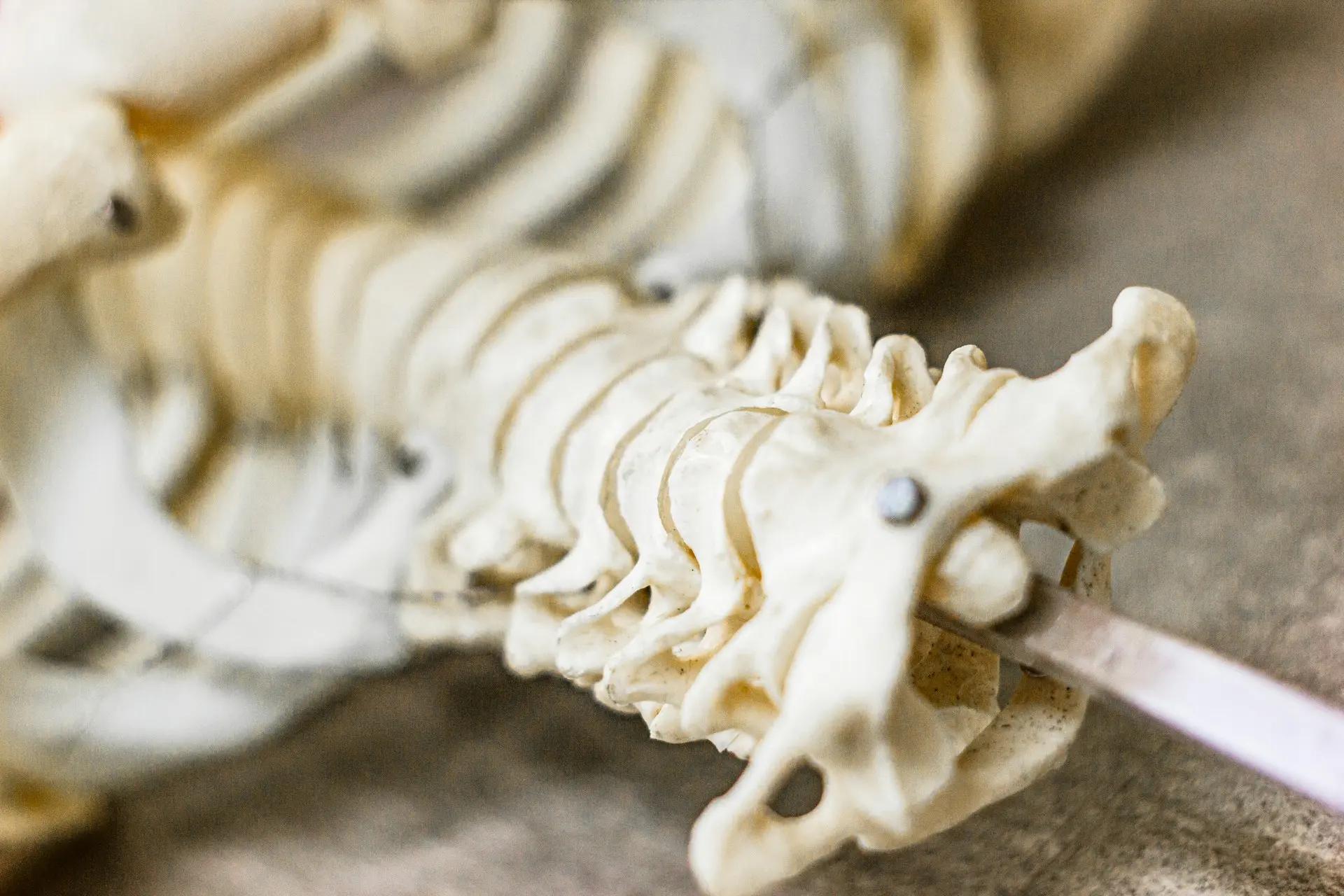
While it’s natural for your spine to bear this load, over time the pressure can cause compression and strain. Left unchecked, this may lead to sore back muscles, stiffness, and added stress on the spinal cord.
The good news? You don’t need surgery to fight back against spinal compression. Simple adjustments—starting with how you sleep, can make a big difference. Keep reading to learn how to decompress your spine while you rest.
How To Decompress Your Back While Sleeping
1. Proper Sleeping Positions
One of the most effective positions for spinal decompression is the flexed hip position. To try it, lie on your side and bend your hips at about a 30-degree angle, then bend your knees at another 30 degrees.
While it may feel unusual at first, these angles help balance your body, gently flex your neck, and lengthen your spine.
You can add a pillow between your knees to keep your hips parallel while asleep. A memory foam lower back pillow is best for aligning your hips and pelvis.
Alternatively, you can try the face-up position. In this posture, you lie flat on your back with your eyes facing the ceiling.
Place a pillow under your knees at about a 30-degree angle to gently elongate the spine and ease pressure on the lower back. For added comfort and support, you can also place a small pillow under your neck to keep the upper spine aligned.
Inclined back sleeping is another great option for decompression. In this position, you sleep on your back with a pillow between your torso and legs.
This removes the pressure on your spine and suppresses lumbar spine injuries and sciatica symptoms.
2. Memory Foam Mattress & Pillow
Choosing the right sleeping position is only part of the solution, using the right sleep aids can make a big difference in keeping your spine supported through the night.
Memory foam is especially helpful for spinal decompression. A memory foam pillow adapts to the natural curve of your neck and spine, easing pressure on sensitive points. For even greater relief, consider a memory foam mattress, which helps distribute weight evenly and reduces strain across your whole body.
Not ready to invest in a new mattress? A memory foam topper is a more affordable way to upgrade your sleep surface.
Research shows that optimising your bedding can significantly reduce back pain and improve sleep quality (Jacobson, Boolani & Smith, 2009).
So if you’re serious about decompressing your spine, don’t overlook your pillow and mattress
.
Shop Groove Memory Foam Pillow

3. Pre-Bed Exercises
Finally, gentle stretching before bed can also help decompress your spine after a long day. Simple movements like supine stretches, heel slides, Cat-Cow, or Child’s Pose are effective, and many come straight from yoga.
Once you’re comfortable with low-intensity stretches, you can gradually progress to moderate ones.
Always check with your healthcare provider before starting new exercises, and stop if your pain worsens. If symptoms persist, book an appointment with your doctor.
What Is Spinal Compression?
Spinal compression occurs when pressure builds on the gel-like discs that cushion your spine. This pressure restricts the flow of water, nutrients, and oxygen, making it harder for the discs to stay healthy. Over time, they may bulge or herniate, leading to pain and possible nerve damage.
The most common cause is gradual wear and tear from osteoarthritis, which is especially common in people over 50 (Johns Hopkins Medicine, n.d.).
However, spinal compression isn’t always age-related. It can also result from injury, scoliosis, spinal tumors, infections, bone diseases, or autoimmune conditions like rheumatoid arthritis. These causes can affect people at any stage of life.
Benefits of Spinal Decompression
Embracing spinal decompression therapies comes with a range of advantages. Here are some ways you can improve your quality of life.
- Back pain relief (less upper and lower back pain)
- Better mobility
- Lessens stress on the spine
- Prevents future back pain
- Improved posture
- Higher sleep quality
- Lightens headaches
- Pain-free therapy
- Long-term results
Conclusion
Prioritising spinal decompression while sleeping will help you reduce pain, improve your posture, and get a better night of rest. Plus, the less compressed your spine is, the less likely you are to develop long-term side effects of chronic pain.
Hopefully, these tips have proved how easy it is to decompress your spine at night. Bookmark this page so you don’t lose them. Good luck!
Explore the world of memory foam now. The Original Groove Pain Relief Pillow is designed to provide effective pain relief and better sleep to refresh you in the mornings.
References
- Jacobson, B.H., Boolani, A. and Smith, D.B. (2009). Changes in back pain, sleep quality, and perceived stress after introduction of new bedding systems. Journal of Chiropractic Medicine, [online] 8(1), pp.1–8. doi:https://doi.org/10.1016/j.jcm.2008.09.002.
- NHS Choices (2020). Overview - Lumbar decompression surgery. [online] NHS. Available at: https://www.nhs.uk/conditions/lumbar-decompression-surgery/.
- www.hopkinsmedicine.org. (n.d.). Spinal Cord Compression. [online] Available at: https://www.hopkinsmedicine.org/health/conditions-and-diseases/spinal-cord-compression#:~:text=Spinal%20cord%20compression%20is%20caused%20by%20a%20condition%20that%20puts.
About The Author
Dr. JoAnn Giesenhaus is a dedicated chiropractor with over 20 years of experience, committed to helping people achieve vitality and live life to the fullest.
An expert in Corrective Care Programs, utilising advanced technology like Posture Screen, Sit Screen testing, Motion Study X-Rays, Arthrostim, and Vibracussor for gentle, effective spinal adjustments.